Stands and Mounts: Putting the Phone Where You Can Actually Play
In 2026, musicians rely on their phones for everything from backing tracks and metronomes to lyric sheets and remote recording apps. The difference between a smooth gig and a frustrating one often comes down to whether your device is mounted securely where you can see and reach it without breaking your flow. A good stand or mount keeps the screen at eye level, protects the hardware, and stays out of the way of cables and instruments.
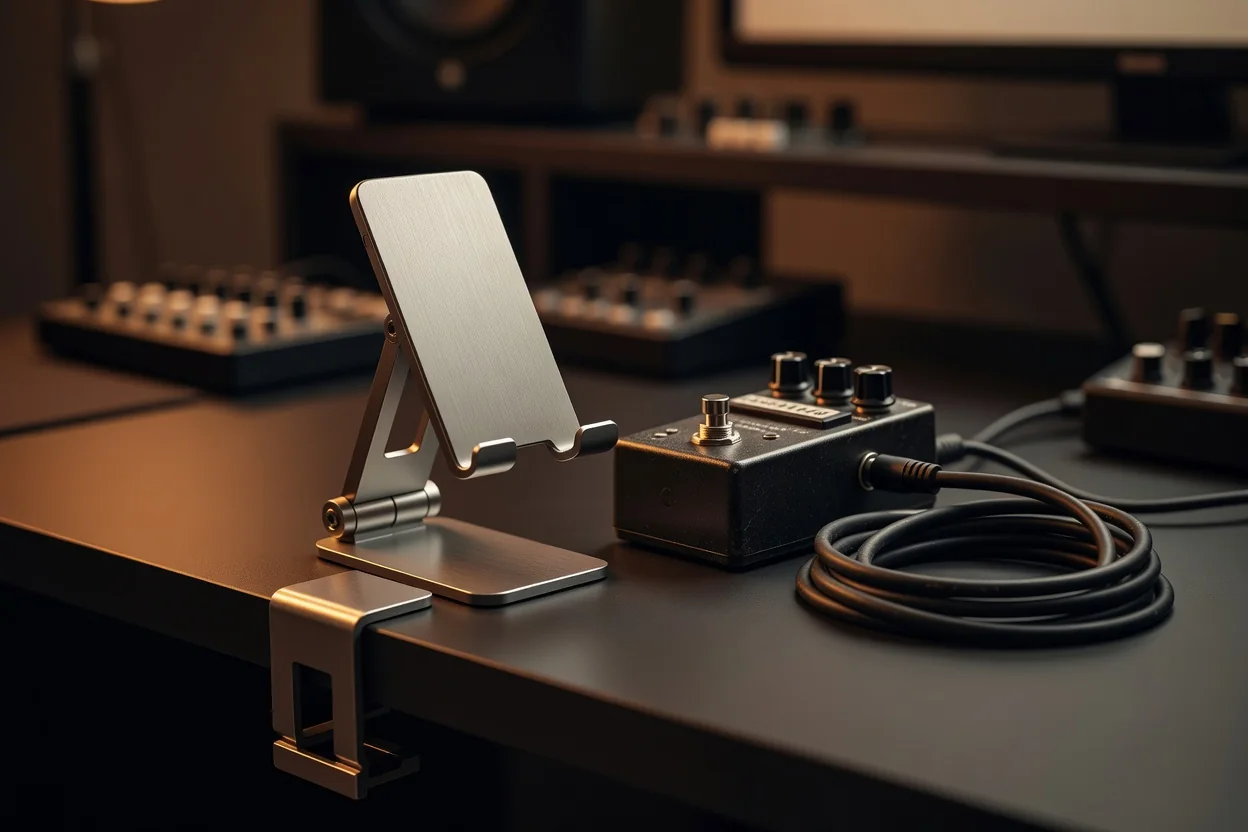
At home, a simple desk stand can transform a cluttered workspace into a proper mini-studio. These weighted bases hold the phone upright or at a slight angle, making it easy to read chord charts while both hands stay on your guitar or keyboard. On stage, clamp-style mounts that attach directly to a microphone stand save precious real estate and keep the device within arm’s reach for quick glances between songs.
Gooseneck versus Rigid Arms
Gooseneck arms offer flexibility, letting you bend the phone into almost any position above or beside your setup. They excel in awkward stage environments where mic stands are at odd heights. However, they can transmit vibration from loud monitors or stomping feet, sometimes causing the phone to slowly drift during long sets. Rigid arms, by contrast, lock into place with a ball joint or ratchet mechanism. They resist movement far better but require more careful initial positioning. For recording sessions in a treated room, many players now combine a rigid arm with a small tripod adapter that sits on the floor or a low shelf, keeping the phone steady for hands-free video or ambient mic capture.
Practical Details That Matter
Before buying any mount, check that it leaves the charging port, headphone jack, and volume buttons accessible. Nothing kills momentum faster than having to unclamp your phone mid-rehearsal to plug in a cable. Cold-shoe mounts are increasingly popular because they let you attach a tiny LED light for better visibility on dark stages or clip on a wireless receiver without crowding the phone itself. Durability becomes critical for touring musicians: metal clamps and reinforced joints hold up to repeated setup and tear-down, while plastic hinges tend to loosen after a few months of heavy use.
Typical price ranges reflect this difference. Basic desk stands usually fall between $15–35, while stage-ready clamp mounts with adjustable arms sit between $25–65. Heavy-duty rigid systems designed for frequent travel often run $45–90. Investing a bit more in a sturdy model pays off when it survives years of gigs instead of failing mid-tour.
- Verify cable clearance before locking the clamp
- Test vibration transfer by playing loud chords nearby
- Choose wider grips for phones in thick cases
- Carry a spare hex key if the mount uses one for adjustments
Choosing by Use Case
| Mount Type | Best For | Stability | Typical Price Range |
|---|---|---|---|
| Desk Stand | Home practice & recording | High on flat surfaces | $15–35 |
| Clamp with Gooseneck | Live stage use | Medium (vibration sensitive) | $25–55 |
| Rigid Arm on Mic Stand | Hybrid stage & studio | Very high once locked | $40–75 |
| Tripod Adapter | Room recording & video | High with proper base | $20–50 |
| Cold-Shoe Add-on | Adding lights or receivers | Depends on base mount | $10–25 |
Whether you’re tracking demos in your bedroom or performing in a noisy club, the right phone mount disappears into your workflow. It simply holds your device where your eyes naturally fall, letting you focus on playing rather than fumbling. In 2026, with phones more powerful than ever, a few well-chosen dollars spent on a reliable stand or clamp can protect your concentration and your gear for countless sessions to come.