Silent Guitar Practice: A Headphone Rig That Feels Like an Amp
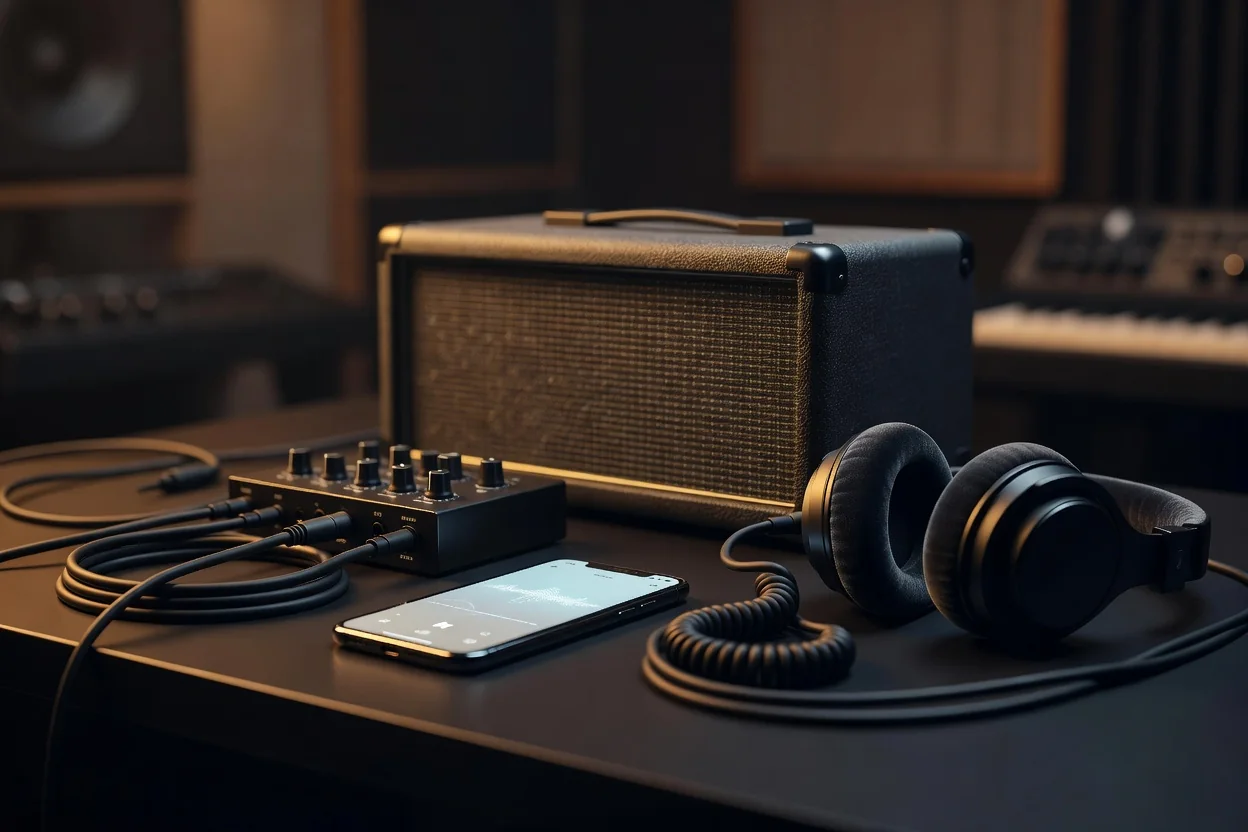
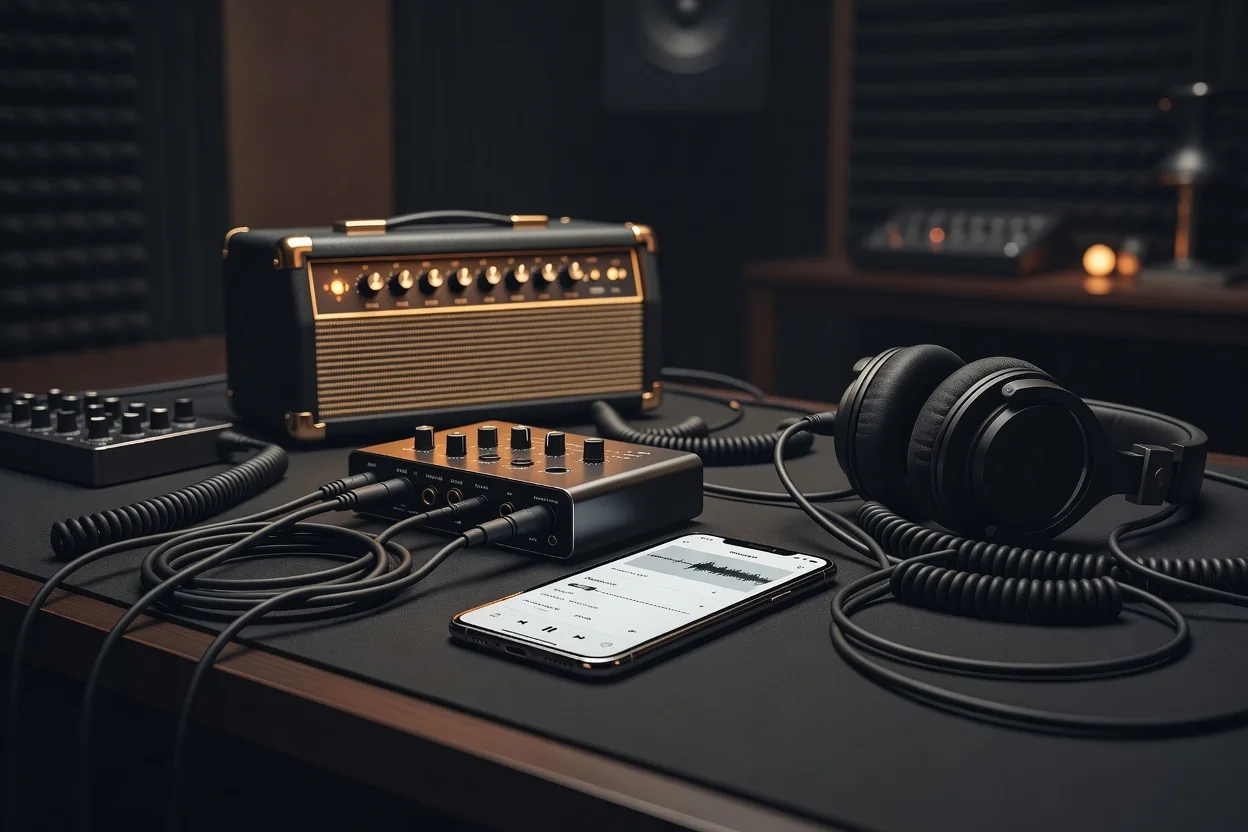
In 2026, bedroom guitarists face the same old problem: how to play loud and feel the amp without waking the house. A well-designed silent practice rig using headphones can deliver the satisfying punch of a cranked tube amp while keeping everything completely private. The secret lies less in chasing the perfect virtual amp and more in choosing the right cabinet simulation and managing your signal chain with care.
Modern modeling tools let you bypass a physical speaker entirely and feed a virtual cabinet straight into your headphones. Cab simulation matters more than amp choice because it shapes the frequency response and dynamic interaction that your ears actually hear. A good virtual 1x12 or 2x12 cabinet with adjustable mic placement gives the tone weight and cut that generic amp models often lack on their own.
Getting Gain Staging Right
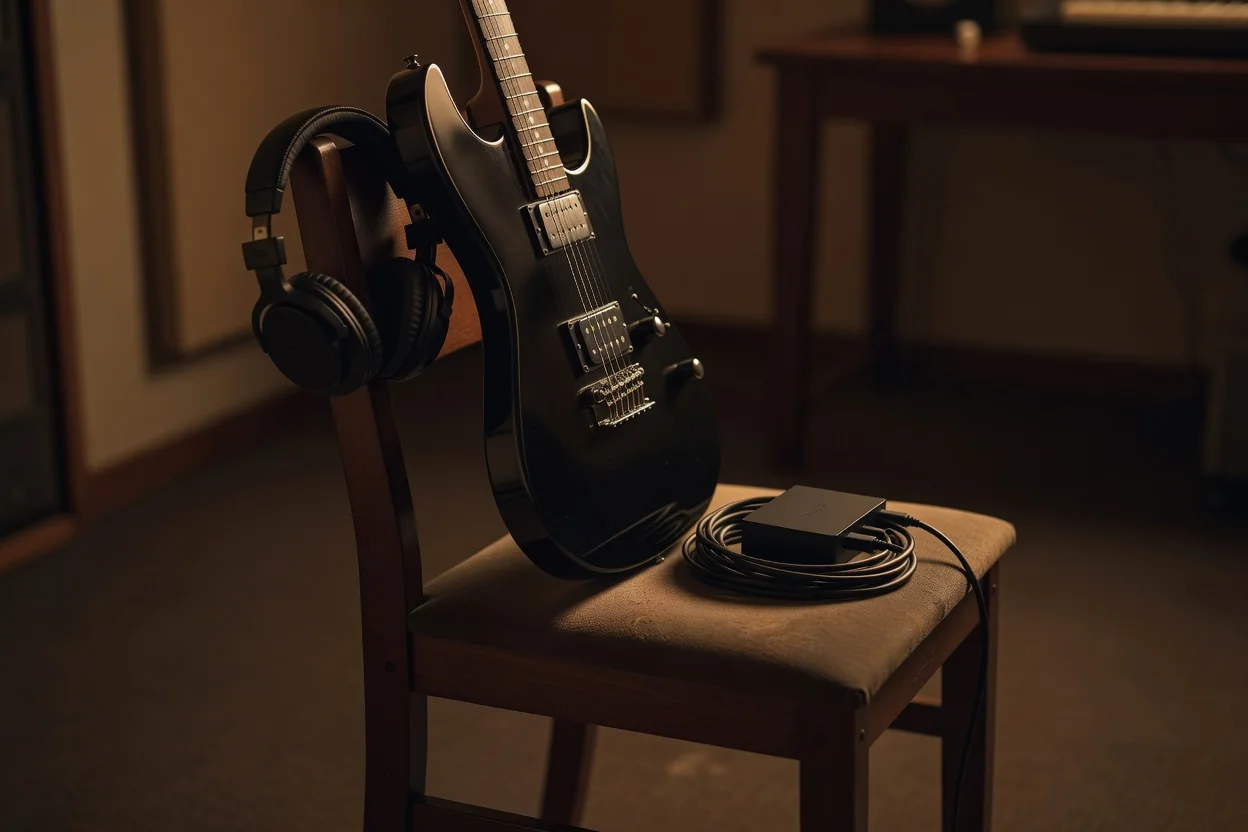
Headphone rigs expose every mistake in gain structure. Set your input gain so that the cleanest tones peak around -12 dBFS. This leaves headroom for leads and boosts without digital clipping. When you push the virtual amp harder, the cabinet simulation should compress naturally rather than the DAW meter slamming into the red. A typical practice chain might run guitar into a preamp model, then a cabinet impulse at -18 dB, followed by a final output stage that never exceeds -6 dBFS into the headphones. This keeps cleans sparkling and high-gain leads from turning into harsh fizz.
Choosing the Right Headphones
Closed-back headphones are the clear winner for late-night sessions. They isolate the sound both ways, preventing your playing from bleeding into the room and stopping outside noise from ruining your tone. Open-back models offer a more natural soundstage and less ear fatigue during very long sessions, but they leak enough sound that family members will still hear your palm mutes at moderate volumes. For silent practice, closed-back designs with good low-frequency extension around 80 Hz deliver the satisfying thump that mimics a real speaker cone moving air.
One common complaint with any headphone rig is the sterile, “inside-your-head” feeling. Adding a subtle room reverb—set to roughly 15-25 percent wet with a decay time of 1.2 seconds—can simulate the natural reflections of a small rehearsal space. Keep the reverb after the cabinet simulation so it sounds like the speaker is in a real room rather than floating in digital space. This single move transforms a clinical tone into something far more inspiring to practice with for hours.
Practicing in Context
The best rigs keep rhythm reference inside the same signal chain. Load a metronome or simple drum loop directly into your audio application so it travels through the same virtual cab and reverb as your guitar. This helps you hear exactly how your playing sits against the beat without switching devices or fighting latency. Start at 70 bpm for chord work, then gradually increase to 110-130 bpm for lead lines. The goal is musical flow, not just technical exercise.
Protecting your hearing should be non-negotiable. Even with silent rigs, it’s easy to crank the volume to compensate for poor tone. A safe target is keeping average listening levels below 85 dB SPL for no more than one hour at a time. Many interfaces now show real-time SPL estimates; use them. Take five-minute breaks every 30 minutes and let your ears reset in silence.
Key points
- Choose the cab model before touching the amp controls.
- Keep peaks out of the red at every stage of the chain.
- Add a short room reverb to make headphones feel natural.
| Headphone Type | Isolation | Low-End Feel | Best For | Drawback |
|---|---|---|---|---|
| Closed-back over-ear | Excellent | Strong 70-120 Hz punch | Late-night apartment practice | Can feel warm after 90 minutes |
| Open-back over-ear | Poor | Natural but lighter | Daytime focused listening | Sound leaks into room |
| Closed-back on-ear | Good | Tight and fast | Quick 20-minute sessions | Less comfortable for long wear |
Building a silent guitar practice rig in 2026 is no longer about compromise. With thoughtful cab simulation, careful gain staging, the right closed-back headphones, a taste of room reverb, and integrated rhythm tools, you can experience the full emotional range of an amplifier at any hour. The rig becomes an instrument in itself—one that rewards musical decisions while protecting both your tone and your hearing. Regular players who adopt these habits often report faster progress because they can practice more consistently without disturbing their lives or their neighbors.