A Phone Guitar Rig on Stage: A Live Setup That Survives the Gig
Stepping onto a dimly lit stage with nothing but a guitar, a small audio interface, and your phone feels liberating until the first kick drum rattles the floor and your rig goes silent. In 2026, phone-based rigs have become reliable enough for club gigs and small festivals, provided you treat the setup like serious stage gear rather than a bedroom toy. The trick is anticipating movement, light interference, and the occasional software hiccup before the audience notices.
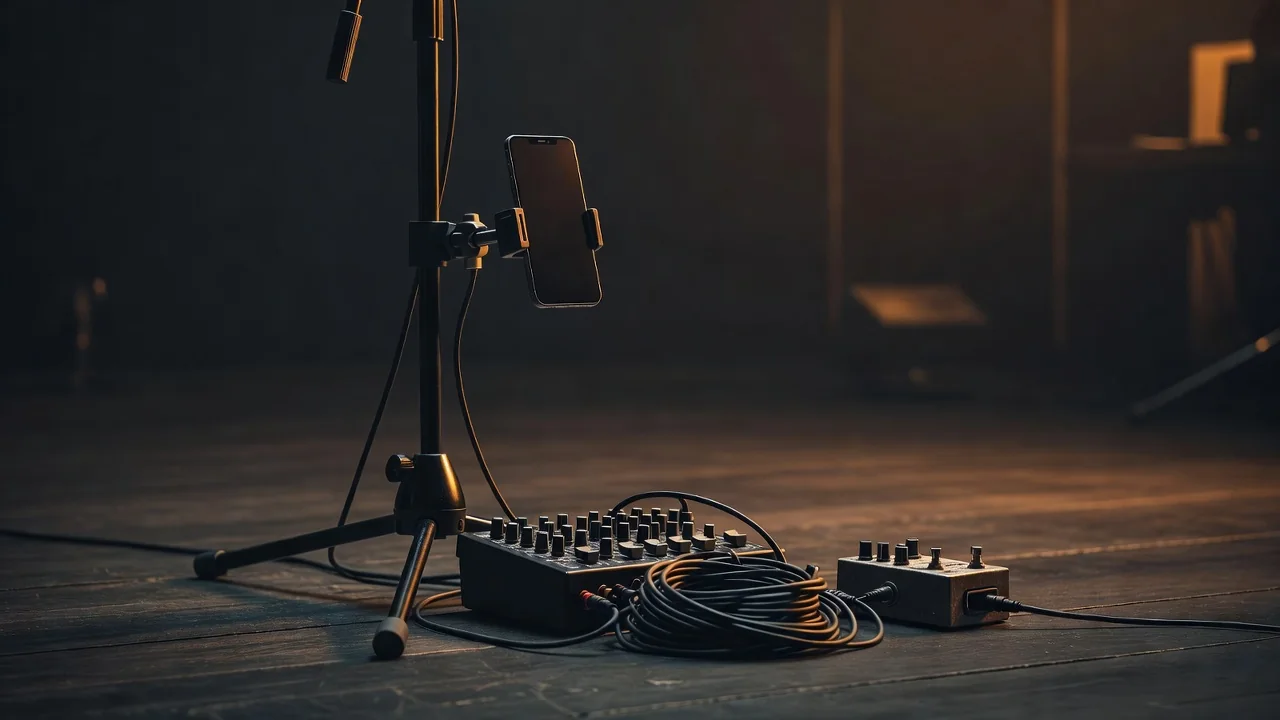
Secure the interface first. Velcro the audio interface to a pedalboard or mic stand base so it cannot slide when the stage vibrates. Run instrument and output cables through a cable tie anchored to the same board, leaving just enough slack for you to move but not enough for the cable to yank the phone off its mount. A simple gooseneck phone holder clamped to the mic stand keeps the screen visible without blocking your sightlines.
Locking Down the Phone
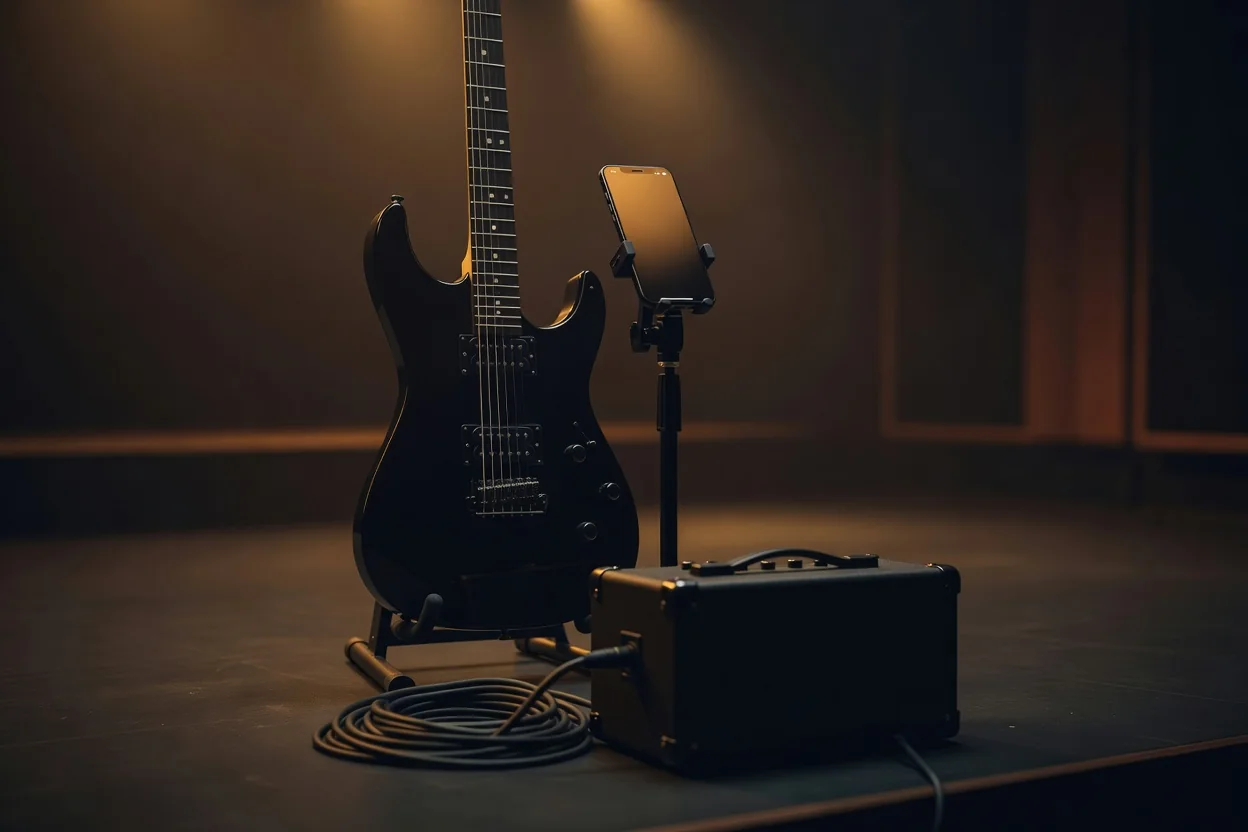
Before leaving the house, switch the phone to airplane mode and turn off all non-essential notifications. Set screen brightness to around 65 percent; stage lights will wash out anything brighter, while anything dimmer becomes invisible under colored spots. Enable a “do not disturb” schedule that activates automatically at 7 p.m. so you never have to fumble with settings mid-set. Keep the phone charged above 80 percent and carry a slim power bank that can top it up between bands without unplugging the audio cable.
Output Choices and Backup Strategy
Decide early whether to send a direct signal to the house PA or run through a full-range flat-response speaker. A DI output into the mixing desk gives the sound engineer control and removes another speaker from the stage, but it means your personal monitor mix depends entirely on the house engineer. An FRFR speaker on stage lets you hear exactly what you rehearsed, yet it adds weight and another power cable to manage. Most players settle on the DI route for quick load-ins and keep a small powered monitor pointed at their feet when the venue allows it.
Always carry a spare instrument cable and a short XLR backup. Record a clean example of your main tone directly from the interface into the phone’s voice memos at soundcheck. If the phone crashes mid-song, you can hand the engineer the file and ask them to play it through the PA while you swap cables and reboot. It has saved more than one set.
Ten-Minute Soundcheck Routine
A focused ten-minute soundcheck keeps the band happy and the engineer sane. First, play your loudest rhythm part for thirty seconds so the engineer can set gain structure. Next, toggle through all your tone presets while standing exactly where you will perform; this reveals any Wi-Fi or Bluetooth dropouts caused by the venue’s router. Check stage volume against the drums for two minutes, then walk the room quickly to confirm the front-of-house mix does not disappear in the back. Finish by muting everything and testing your backup cable and recorded tone. Time it; ten minutes is realistic once the routine becomes muscle memory.
Key points
- Lock the phone in a clamp mount, never on top of an amp.
- Airplane mode on, brightness up, auto-lock off.
- Carry one spare of every cable in the chain.
| Common Stage Failure | Typical Fix |
|---|---|
| Phone screen invisible under lights | Drop brightness to 50-70 % before doors; use a matte screen protector |
| Interface loses connection after kick hits | Anchor interface and cables with industrial Velcro and cable ties |
| Sudden notification interrupts audio | Airplane mode plus scheduled do-not-disturb from 30 minutes before stage time |
| DI signal too hot for the PA | Keep output level at -12 dB on the interface and let the engineer add gain |
| Phone battery drops below 20 % mid-set | Carry a 5,000 mAh power bank and a right-angle charging cable |
Once these habits click, a phone rig stops feeling like a gamble and starts feeling like the lightest, most flexible setup you have ever used. The audience hears a full guitar tone; you travel with a backpack instead of a pedalboard case. Stay disciplined with the pre-show checklist, respect the stage’s physical realities, and the little computer in your pocket will keep the gig alive.