Recording a Band Rehearsal With One Phone and No Mixer
In 2026 a smartphone still makes a surprisingly useful tool for capturing a full band rehearsal when you have nothing else. The built-in microphones have improved enough that a single phone, placed with care, can deliver a balanced reference recording good enough to evaluate arrangements, spot timing issues, and remember ideas that surfaced during the session. The trick is accepting its limitations from the start: you are not chasing studio tone, only a clear picture of what the band actually played together in the room.
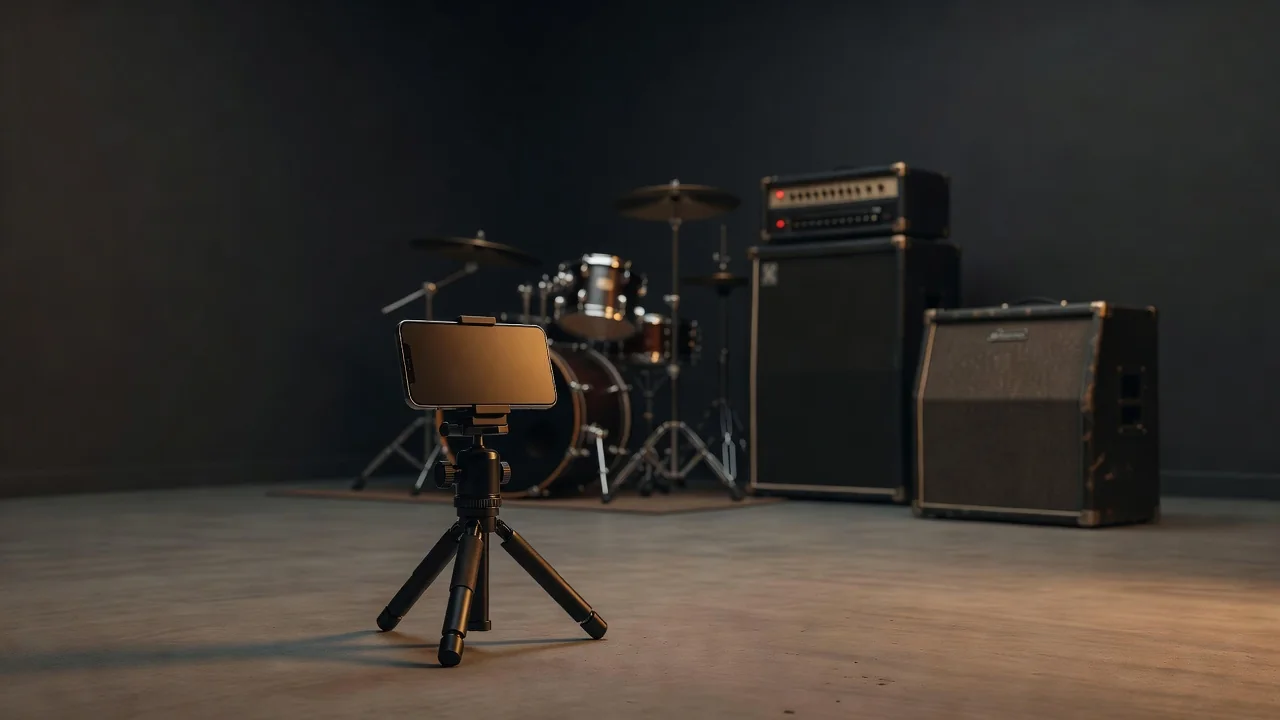
Position the phone in the corner diagonally opposite the drum kit, roughly at ear height. This placement lets the direct sound from the guitars, bass, and vocals reach the microphones before the drums overpower everything. A tripod or even a sturdy shelf works; the goal is stability so the phone does not shift when the bass amp starts to rattle the floor. Set your input gain conservatively—aim for peaks around –12 dB to leave headroom for the inevitable volume spikes when the drummer kicks into the chorus or the guitarist steps on a boost pedal.
Why the Built-in Microphone Is Good Enough
Modern phone mics handle a surprisingly wide dynamic range when you do not push them into distortion. For rehearsal documentation the built-in stereo pair captures the natural blend of the room without needing external interfaces or mixers. The slight compression and high-frequency roll-off that occurs actually helps tame harsh cymbal bleed and guitar fizz, leaving a listenable file you can review immediately after the session. Treat the result as a sketch, not a master—its real value lies in revealing whether the chorus arrangement drags or if the bridge riff gets lost under the drums.
Practical Recording Workflow
Hit record at the beginning of rehearsal and let the phone run for the entire two or three hours. Most phones can manage large files without issue if you have cleared storage space. Instead of stopping between songs, simply announce the title or number out loud before each new piece; you can split the long file later. After the session, listen back on decent headphones or studio monitors at a moderate volume. Focus on arrangement problems—tightness of the groove, balance between instruments, places where energy drops—rather than nitpicking tone. The phone will not flatter anyone’s sound, but it will tell the truth about the music.
Placement Options and What They Capture
| Position | What It Captures Best | Drawbacks |
|---|---|---|
| Corner opposite drums, ear height | Natural band balance, clear vocals and guitars | Drums slightly distant |
| Center of the room, 1.5 m high | Even room sound, good drum presence | Guitars and bass can get lost |
| Near the vocalist, chest height | Strong vocal intelligibility | Drums and cymbals become harsh |
| Behind the drum kit | Powerful drum sound | Everything else feels distant and muddy |
- Always record in uncompressed format when possible to preserve detail for later editing.
- Keep the phone away from amplifiers to reduce low-frequency buildup.
- Check levels after the first loud section and adjust gain only if necessary.
- Use the recording to mark arrangement changes directly in your notes or DAW timeline.
- Accept that one phone cannot replace a multi-mic setup, but it can reliably document progress.
The beauty of this minimal approach is its honesty. A single-phone recording rarely sounds impressive on its own, yet it consistently reveals the real strengths and weaknesses of new material. When the band hears the playback together, everyone focuses on the same performance instead of arguing about who sounded best through their own amp. In 2026 that kind of shared reference remains one of the most practical ways to improve rehearsals without slowing them down.
Over time you will develop an instinct for the sweet spot in any given practice room. Until then, start in the far corner, keep gain low, and let the phone listen to the whole session. The files may not win awards, but they will help your band write better songs and play them tighter—exactly what a rehearsal recording should do.