Recording Acoustic Guitar on a Phone: Placement, Gain and Room
In 2026, your smartphone remains one of the most practical tools for capturing an acoustic guitar performance. With improved built-in microphones and simple recording apps, you can achieve surprisingly musical results without hauling in a full studio rig. The key lies in understanding a few core principles: where you place the phone, how you set the input level, and what kind of room you choose to record in.
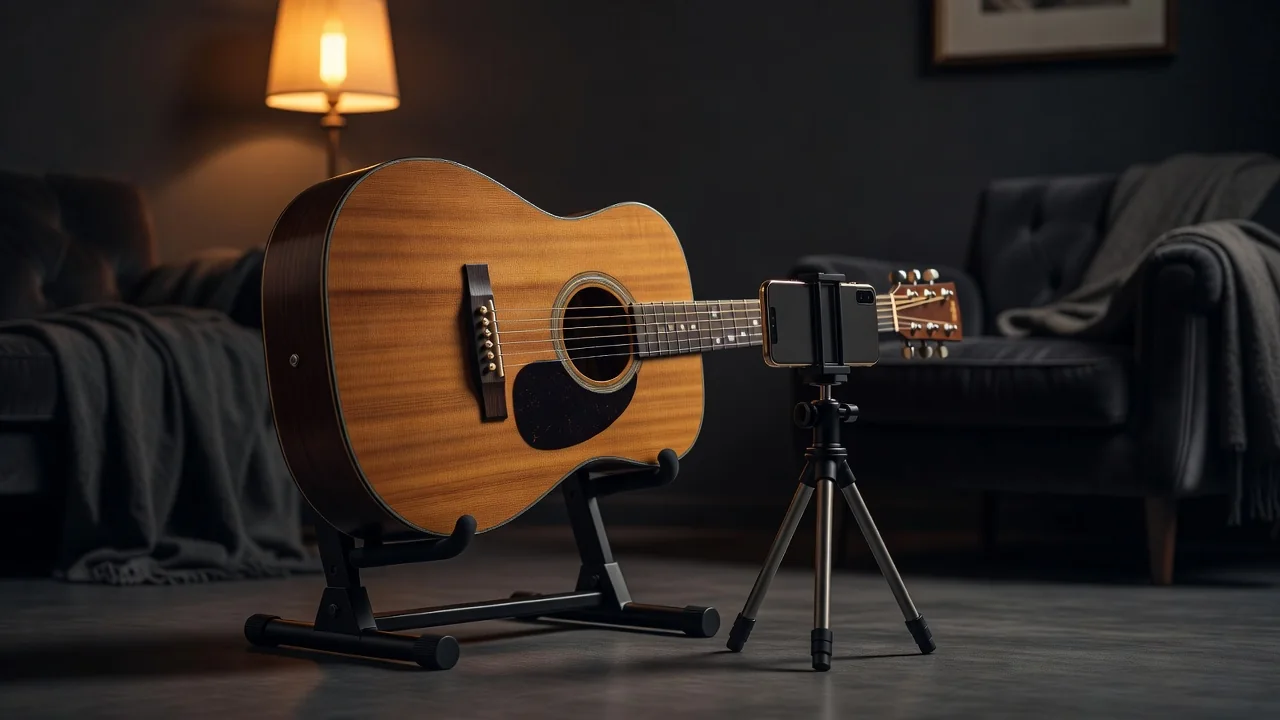
Start by positioning the phone roughly a forearm’s length from the guitar, pointing toward the twelfth fret rather than directly at the soundhole. This placement captures a balanced blend of string attack and body resonance without the boomy low-end buildup that often plagues soundhole recordings. Keep the phone at about the height of your picking hand so the microphone aligns naturally with the plane of the strings.
Setting Clean Gain Levels
Before hitting record, play the loudest strum you plan to use in the performance and adjust input gain until those peaks hover around -12 dBFS. This leaves enough headroom for unexpected dynamic spikes while keeping the signal well above the noise floor of most phone microphones. If your phone offers a visual meter, watch for occasional yellow flashes on the loudest hits; consistent red clipping means you need to pull the gain back immediately.
Many players overlook room acoustics when recording on the go. A bare kitchen or tiled bathroom will give you harsh reflections and an unnatural metallic ring. Instead, choose a living room or bedroom with soft furniture, curtains, and rugs. These surfaces absorb excessive high frequencies and tame standing waves, resulting in a warmer, more intimate sound that flatters the guitar’s natural tone.
Built-in Mic vs External USB Options
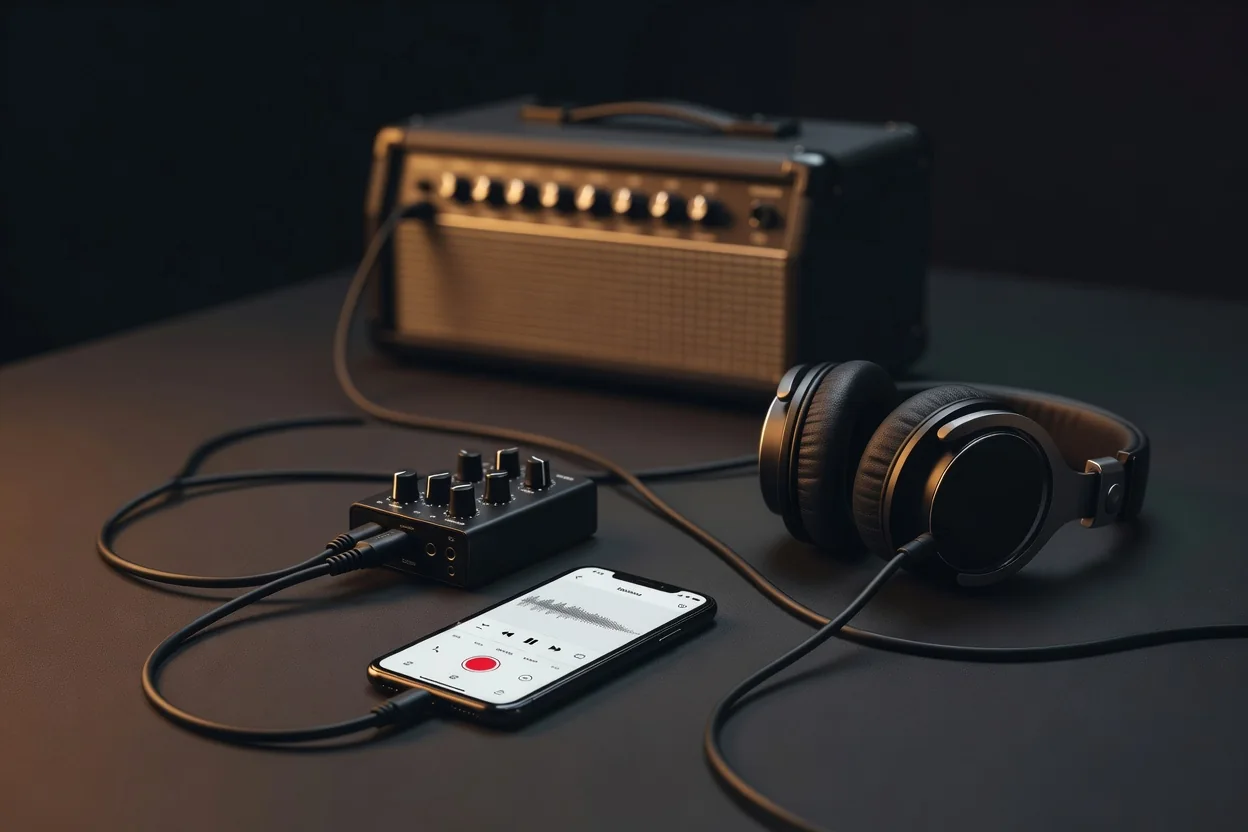
The phone’s built-in microphones have improved dramatically, but an external USB microphone can still offer better off-axis rejection and a more focused sound. Plugging in a small-diaphragm USB mic lets you position the capsule more precisely while the phone handles only the recording duties. For quick sketches or location work, the internal mics often suffice if you follow the placement guidelines above.
Try recording two separate takes of the same part, then pan them slightly left and right in your editing app. This simple doubling trick adds width and thickness without needing additional instruments. Keep both takes loosely in time with each other; perfect alignment removes the natural chorusing effect that makes the double sound bigger.
Common Problems and Quick Fixes
| Problem | Typical Cause | Practical Fix |
|---|---|---|
| Muddy low end | Mic too close to soundhole | Move to 12th fret, increase distance to 50–70 cm |
| Harsh string noise | Excessive high-frequency reflections | Add blankets or sit near bookshelves |
| Digital distortion | Input peaks exceeding 0 dBFS | Lower gain so loudest strum reaches -12 dBFS |
| Thin, distant sound | Recording in overly dead room | Move closer to 35–45 cm and face a reflective wall |
| Background rumble | Phone handling noise or HVAC | Use a small tripod and turn off heating or air conditioning |
Always record at 24-bit depth when your phone allows it. The extra dynamic range helps preserve the subtle decay of nylon or bronze strings. After capturing your takes, listen back on headphones rather than the phone’s tiny speaker. Small details like finger squeaks or breathing become obvious this way, letting you decide whether another pass is needed.
With practice, these techniques become second nature. The goal isn’t to compete with million-dollar studios but to document your musical ideas with honesty and clarity. A well-placed smartphone recording can carry genuine emotion that polished productions sometimes lose. Focus on performance first, then refine your technique around the instrument and environment you already have.
- Check your phone’s orientation lock before recording to avoid accidental pauses.
- Warm up the guitar for ten minutes so the intonation settles.
- Record a short test take and listen critically before committing to a full performance.
These small habits separate usable phone demos from truly inspiring guitar recordings. In 2026, the technology is no longer the limitation; thoughtful placement, sensible gain staging, and an awareness of your acoustic space remain the real ingredients for success.